How I Build Presentations, day 2: Reference demo


For the rest of the posts in this series, please see the series index.
Today marks the first full day working on this presentation; yesterday, I only invested about 4 hours in the solution. Most of today was spent building the reference for my demos. This is a functioning demo system that includes many ideas and concepts—something I will build on. This code won’t be the actual demo code, because once I have this, I can break it down and build my actual demos from it.
The reference demo gives me an opportunity to test my ideas, try them out, learn a lot about the issues, and enables me to cherry-pick scenarios for actual demos. For this presentation, the core idea for my demos is exploring what prime numbers exist below a specified ceiling number. To start, I coded the solution without any threading, then figured out various ways of using threads and thread pools to enable threading.
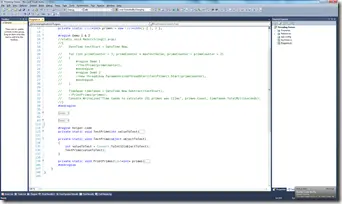
Coding demos away in Visual Studio 2010
Once I had those first few done, I went back to the slide deck and started thinking about the order of the slides, where to place demos, what the flow should be, and finally, there was also a bit of cleanup. One of the things to note is that this is a process, and changes occur. Some are small but have a big impact, like changing the title from Threading to Multi-Threading because that better reflects the core theme and will help people decide whether they want to attend the session. Others may seem more radical, like dropping a few ideas from this presentation already because, as the timing and theme develop, they no longer fit well. This is to be expected—a lot of this creative work is destructive. This screenshot of the slides at the end of the day doesn’t reveal how many slides I created only to delete them 15 minutes later.
This brings me to another tip: always find out when the last possible date is to submit the title and description for your session. Often, your original presentation title or description will change, and being stuck with the old ones may either force you down the wrong path or annoy your audience when they arrive to find the session isn’t what they expected.
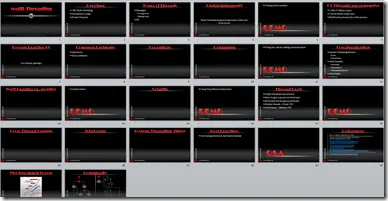
The slides at the end of day 2—those on the bottom row are in danger of “being voted off the island,” but I’m trying to hold on to them because they look so good.