How to create an adapter for the TFS Integration Platform - Part II: Setup of the environment


Note: This post is part of a series and you can find the rest of the parts in the series index.
Getting started with the adapter development isn’t the easiest task—you’re a little in the wild—but this part will serve as a quick-start guide to help you get what you need to become a TFS Integration Platform developer.
SQL Server
The TFS Integration Platform requires Microsoft SQL Server, so you’ll need to install an instance.
TFS
It goes without saying (or maybe it doesn’t) that if you plan to write an adapter to integrate with TFS, you’ll need TFS itself. Even if you don’t care about TFS, you’ll want it for testing—the TFS 2010 adapters are of the highest quality, making them a great test target (e.g., testing between your adapter and TFS). Thankfully, with TFS 2010, you can now install it natively on Windows 7, meaning developers can easily set up a great environment.
Target System (SharePoint for Me)
Since I was developing for SharePoint, I needed a SharePoint installation—which meant a 20GB Windows 7 virtual machine. Hopefully, for you, this won’t be as much of an issue.
TFS Integration Platform
The TFS Integration Platform is a software component and database that runs on your machine and handles data movement. You can download it from http://tfsintegration.codeplex.com/releases, though choosing the right version may not be obvious due to the many options. You want the tools package:
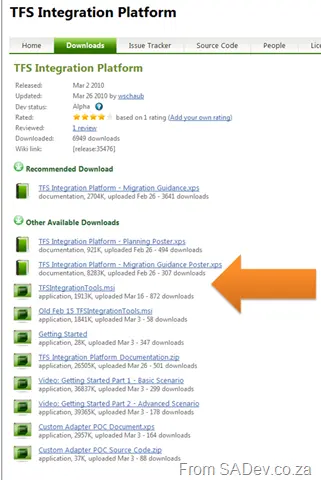
During installation, you’ll have the option to install the service, which is recommended for production environments to keep synchronization running continuously. For development, this isn’t required.
Power Tip: Once the tools are installed, go into SQL Server and back up the TFSIntegrationPlatform database immediately. The platform is still in beta, so there are bugs that may require a restore—plus, a restore is quicker than a reinstall if you want a clean testing environment.
Platform Source
To build adapters, you’ll also need the TFS Integration Platform’s source code, available on CodePlex. Grab the latest version from the Source Control page by clicking the Download link in the latest version box on the far right.
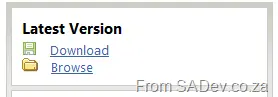
Inside, you’ll find the IntegrationPlatform folder, which contains all the Microsoft code.
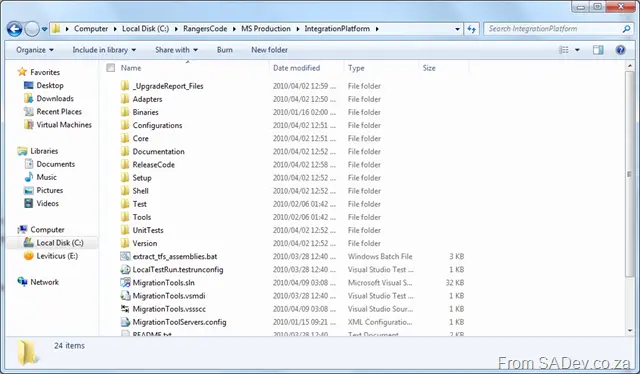
Power Tip: Create a common root folder for the TFS code and yours (I used RangersCode) and then add subdirectories for the platform and your code (e.g., My Production and MS Production under RangersCode). This keeps things organized, makes navigation easier later, and helps distinguish between yours and Microsoft’s code.
The code itself targets Visual Studio 2008, but—like me—you can use Visual Studio 2010 with no issues. Once you’ve done all this, you’re finally ready to write your adapter!