[The series index can be found here.]
As with any conference event, you can expect to fill your bag with trinkets to bring home—the stuff you’d find interesting but would never pay for yourself. Summit had some of that, but that Visual Studio jacket? I would’ve happily paid for it! However, this isn’t about those things. It’s about two very special shiny trophies I got to bring home.
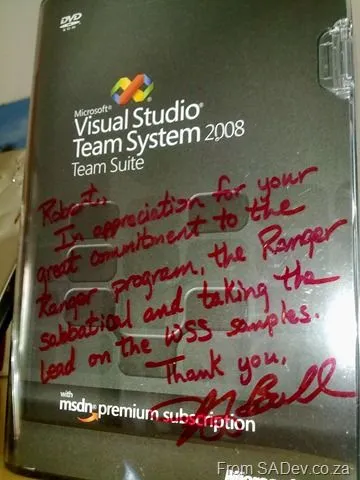
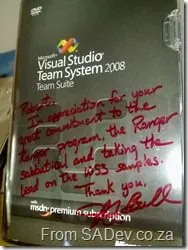
Towards the end of last year, I was awarded the VSTS Rangers Champion award—but at Summit, I finally received my "trophy": a Visual Studio 2008 Team System box, personally signed with a message from Jeff Beehler!
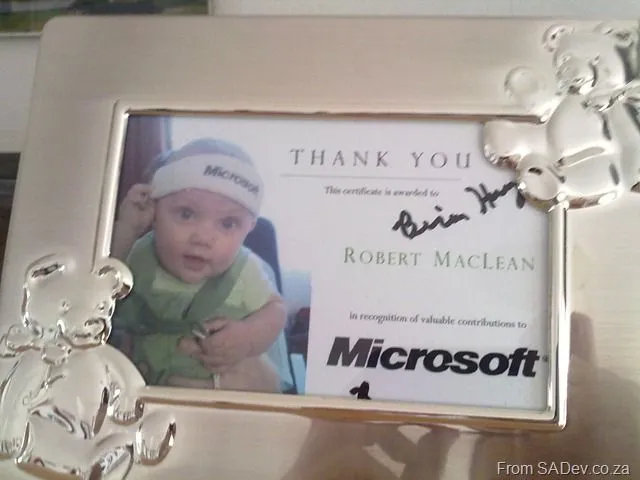
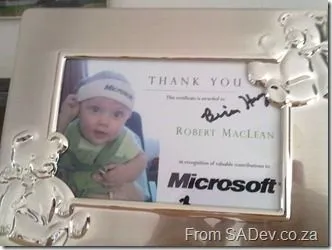
The second special item was a big surprise: internally, there’s an award among Team System MVPs for the "best MVP" (think of being called the Tom Cruise of Top Gun), and Ed Blankenship deservedly won it! But not to be outdone, I won the MVP in Residence award for spending a ridiculous amount of time away from home doing stuff for Microsoft. The trophy for this was a photo frame with a certificate signed by Brian Harry!
[The series index can be found here.]
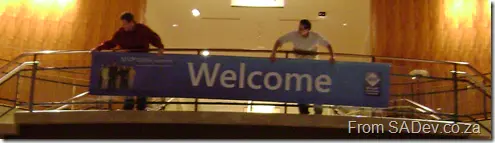
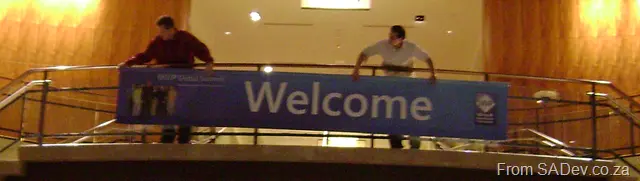
The welcome banner goes up at the MVP Summit!
“Remember, this is NDA—no talking about it, posting on the internet, tweeting, or sharing in any way”—that message is almost the MVP Summit slogan, as it was told to attendees so many times, and for good reason. MVP Summit, for those who don’t know, is an invite-only conference that Microsoft runs yearly at its headquarters in Redmond, Washington (near Seattle). The conference attendees consist of Microsoft staff, MVP awardees, and regional directors, meaning the depth of knowledge is massive. I was comparing it to TechEd, except every session is interactive and starts at least at level 300 (Advanced)—and most of the audience has the knowledge to present it themselves. I can’t go into the details of the sessions due to the NDA, but what I can say is that all the sessions were marked by direct, open, and honest communication between MVPs and the product teams.
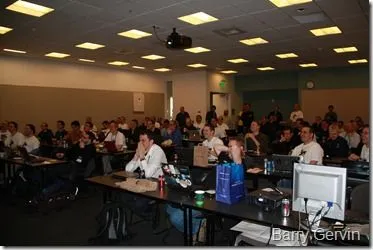
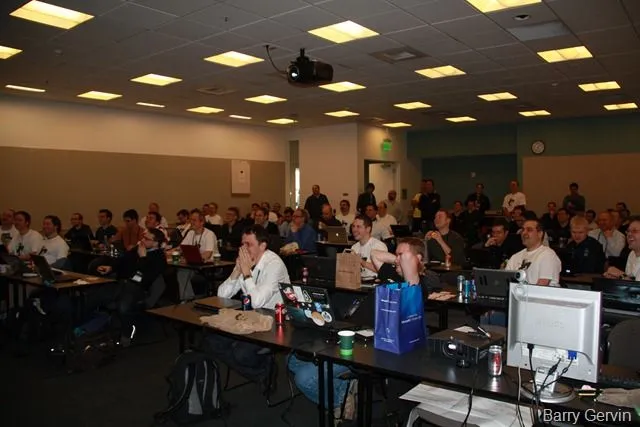
This is what a session looks like at MVP Summit. Plenty of MVPs in front and the product team toward the back.
Stepping back for a moment, let me explain how I got there: Traveling with fellow MVPs (and coworkers—yes, BB&D has three MVPs), Rudi Grobler and Zayd Kara, we left Johannesburg to go to Atlanta (a 15-hour flight), and what should have been a 1-hour stopover in Atlanta turned into 5 hours—thanks to Zayd’s bag losing its boarding pass, meaning we missed the flight (admittedly, a heroic run might have made it, but that sealed it). Unfortunately, Rudi couldn’t get a seat on the next flight and ended up in Atlanta for 8 hours! We (Zayd and I) touched down in Seattle very late, raced to the hotel, and then raced to our first dinner.
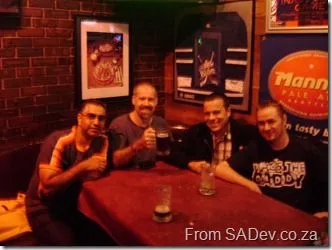
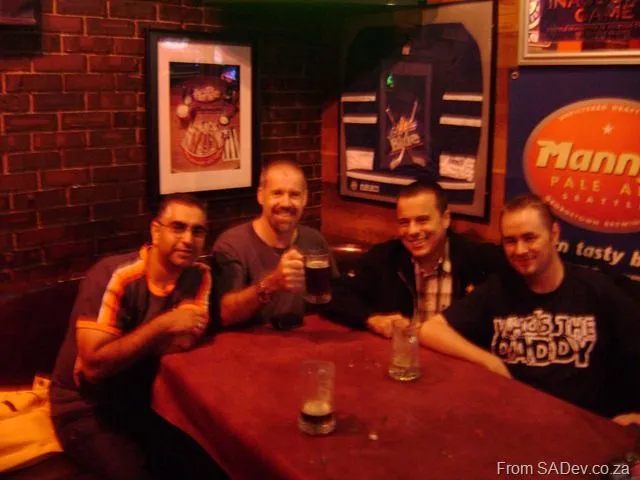
Why are South Africans always the last to arrive at the pub?
The summit was tiring enough between jet lag, getting up early to eat, catching the shuttle to the Microsoft campus, spending the day trying to keep my brain from exploding, and catching the shuttles back—but the limited time there also meant using evenings for special dinners. So I had dinners with MEA MVPs, product teams, and gatherings with all the MVPs, where plenty of networking and side conversations took place.
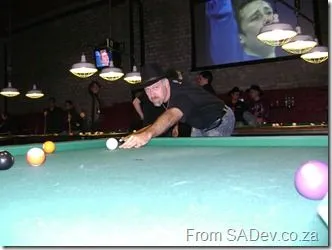
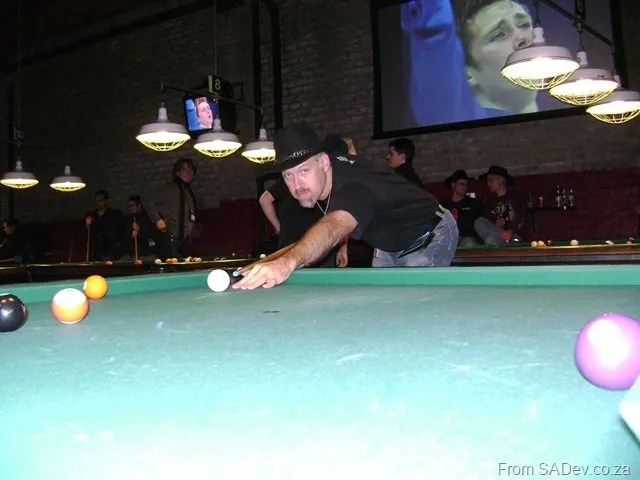
Ruari, our fearless MVP lead, giving me the evil eye for disturbing his pool game skills (which, by the way, didn’t help our team win) at one of the dinners.
What I take away from MVP Summit is twofold:
- Relationships – meeting people I’ve only known via email, meeting new people, and catching up with old friends.
- Guidance – A lot of the content focuses on the why rather than the how, meaning I now better understand Microsoft—and that helps me position myself more effectively at work and in the community.
It’s truly in the interest of companies to send their employees who are MVPs to the summit (with conditions to safeguard them from leaving if that’s a concern), because what they bring back—even if they can’t articulate it—will help in the long run.
This is the series index for my posts on MVP Summit 2010. Items will light up when they become available, so check back soon.
Part 1 – Welcome MVPs
Part 2 – Shiny
Part 3 – Sightseeing
For more in this series, please visit the series index.
 Three weeks away from my family, 32,900 km in distance traveled, thousands of lines of code written, and hundreds of pictures taken—what is the outcome of all of this, and what do I do next?
Rangers
One of the activities I took part in during my time in Seattle was a code review session of the work I had done. The outcome of that was a list of cleanup and fixes, so I need to get that done—meaning my weekends and evenings are not free. I also have documentation to do: part of that will be a blog series on the adapters, and another aspect will be a more formal lab guide so people can set it up.
Moving further from the integration project, the Rangers projects do not stop—in fact, this is my fourth one to date (and the biggest one I’ve done)! So I’m sure that when this moves from active development to a more maintenance cycle, I’ll get involved in some other aspect of the Rangers work. I’m hoping future projects involve testing TFS from the beaches in Hawaii😉
 MVP Summit
I mentioned in my last post that I would be fixing the lack of sightseeing in Seattle soon—well, that will be happening from February 15! I’ll be back in Seattle for the MVP Summit. This is a private Microsoft conference for people who have won the MVP award and is going to be packed with information, up-close-and-personal time with the product team, and plenty of parties!
I’m not going alone this time—I’m taking with me Zayd Kara and Rudi Grobler (both of whom are MVPs and both work with me at BB&D), so we’ll spend a few days there after the MVP Summit to explore Seattle! Seattle, you’ve been warned—the South Africans are coming!
For an insight into what the summit will be like, see the summit teams’ blog, which is packed with info on places to go, sessions to see, what to eat, and more!
Thanks
A final thanks is needed to the people who made this trip happen:
- Willy-Peter Schaub—the force behind getting me there, organizing everything, taking me snow shoeing, listening to me speak endlessly on the buses, and opening his family and house to me.
- Carola—the force behind Willy-Peter and an amazing hostess. I was treated like royalty while staying with them, and I loved our chats in the evenings.
- Terry Y.—the unsung hero of these adapters. He works for Microsoft and spent a lot of time debugging issues in the adapters and integration platform with me.
- Charles Sterling—for opening your home, feeding me better than I’ve ever been fed, and showing me life at Microsoft and America.
- Bill E.—for taking the time out of your schedule to give me guidance!
- Everyone I met at Microsoft—most of whose names I can’t remember because there were so many people—but who made me feel very much at home!
 For more in this series, please visit the series index.
The second part of my trip was a short stay in the city of Redmond (near Seattle, Washington, USA)—the location of Microsoft’s worldwide headquarters. I knew it was big, but I suspected it would be more like a big office park… I very quickly stopped thinking of it that way and instead saw it as its own city—a Microsoft City—because it is MASSIVE!
Let me step back here: I got off the bus from Vancouver and caught a cab to Microsoft. I expected to have to tell the driver where the Microsoft Campus was, but he knew—in fact, he knew so well that he even asked which building I wanted (which did not help, since he still got lost looking for it). Coming off the highway to Redmond, all you see are the Microsoft Connector buses and shuttles (they have nearly 60 buses alone), which help staff navigate the massive place. A good overview of all the transport options—which aren’t just buses and shuttles—is on the Microsoft Alternative Commuting page.
I didn’t think to take a photo of the buses, so here is one I found.
Once inside the buildings—building 41 (.NET Framework) and 25 (Team Foundation Server)—you suddenly feel like you’ve stepped through the looking glass. Outside, Microsoft looks very corporate, and even sitting in reception in building 41 feels corporate (except for the people in shorts who walk past every so often). But inside, the individuality of the people and the passion of the teams shine through. Every office there is different and reflects a lot of personality—whether covered with Australia-themed items (like boomerangs), Star Wars memorabilia, or cat photos—there is plenty of variety.
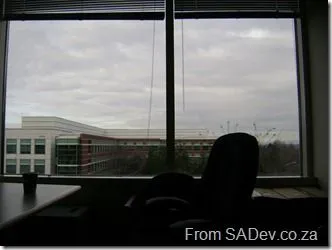
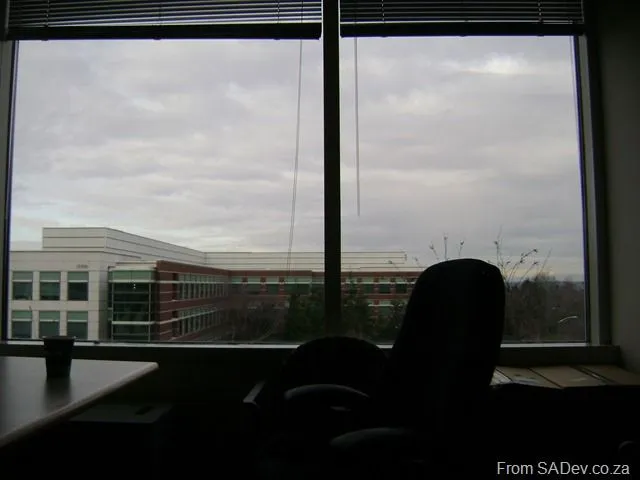
Looking out of my temp office in Redmond—that’s building 42, where ASP.NET teams are based.
The team passion also becomes apparent as you walk around. Monitors on passage walls display burn-down charts, information on outstanding bugs for releases, and inspirational items. For example, in the reporting section for TFS, this team has a section of the passage wall with a dozen or so different-looking reports. I can imagine a developer standing there, looking at them and getting inspired about improving their reports—or even finding a new way to visualize data. For security and NDA reasons, there are no photos of this, but if you want to see what it’s like, you should watch a Channel 9 video where they tour the SQL Reporting Services team—it is exactly like that.
In Vancouver, I stayed with Willy-Peter Schaub, but for Redmond, I needed a new family—so Charles Sterling opened his home and family to me, which was brilliant! Charles gave me deep insights into Microsoft life and its history, which you’d expect from someone with his depth of knowledge. But I also had no idea that Charles is an amazing cook—the dinners at his house are some of the memories I’ll remember for a long time. He also showed me what life in America is like: shops open at 10 at night, Netflix (which is a pipe dream in South Africa), self-checkout (a dream for many criminals there), and, of course, a lot of Halo 3 gaming! It was a truly enlightening experience and helped me adjust my views of America, which, until then, were shaped mostly by South African media and American movies and TV shows (oddly, there are no natural disasters everywhere, like in the movies). So, I owe Charles a huge thank you for all of that!
Unfortunately, my time there was too short and too busy for sightseeing, but I’ll fix that soon!
 For more in this series, please visit the series index.
Vancouver, BC, Canada:
- Host of the 2010 Winter Olympic and Paralympic games
- Where The X-Files was shot for the first five seasons
- Home to the Canucks ice hockey team
- And where I stayed for two weeks!
While there, I took a few hundred photos (thanks to my sister for lending me her camera) that I thought I would share. Not all of them, but some of the highlights that will stay in my memory long after my code is no longer used.
Work
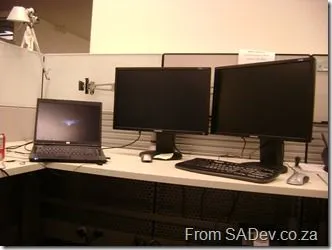
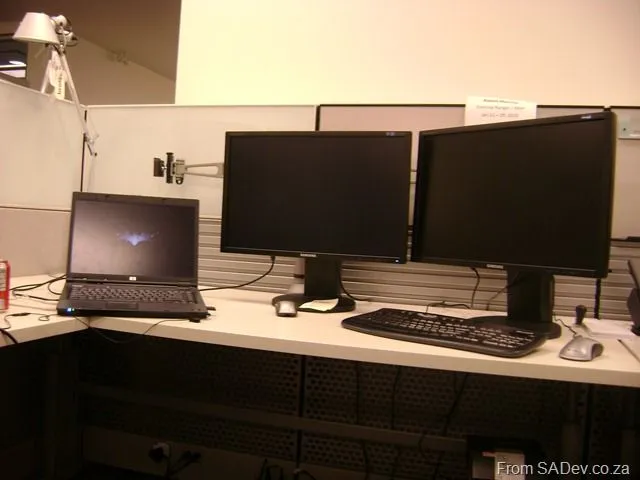
My laptop felt a little threatened by the two 24-inch monitors my desk came with.
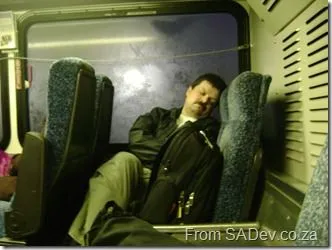
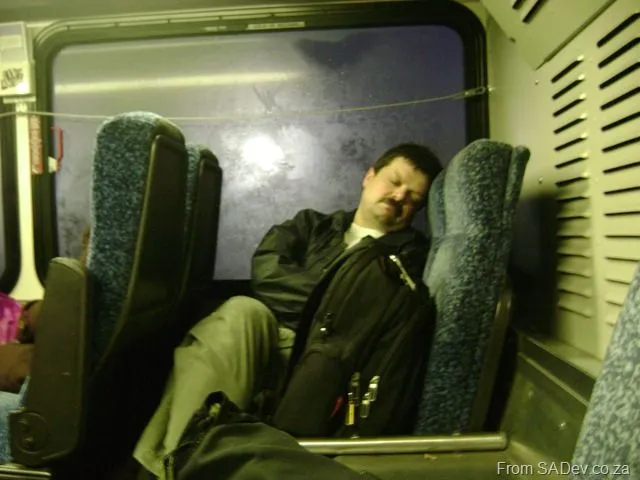
If you ever wondered how Willy-Peter keeps pushing out content all the time…
After 5 days of no sun, when it finally came out, I went outside and took a picture (just in case it went away again) – South Africans are powered by the sun.
Dry Africa
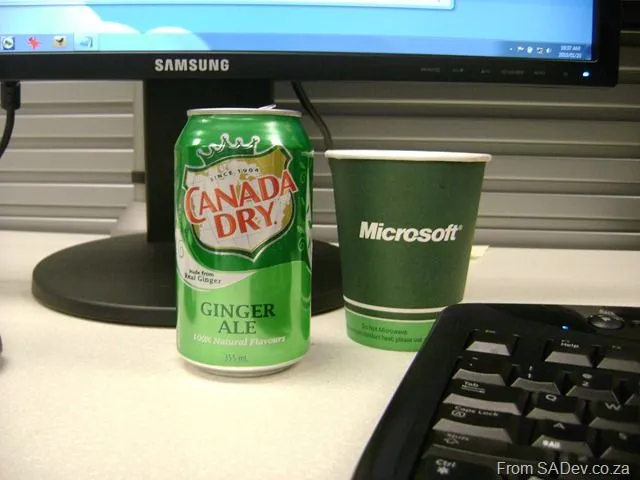
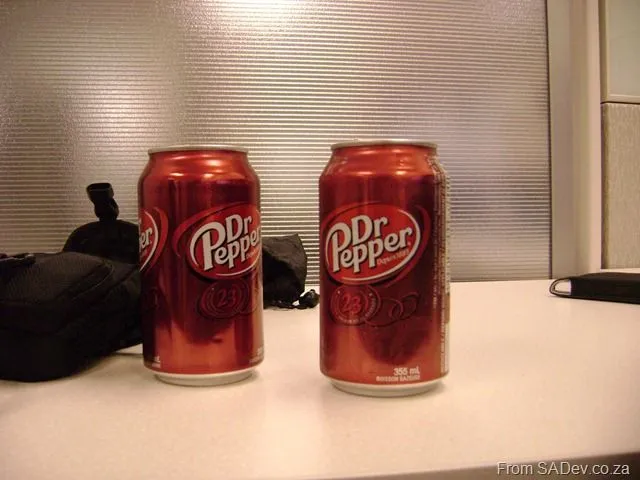
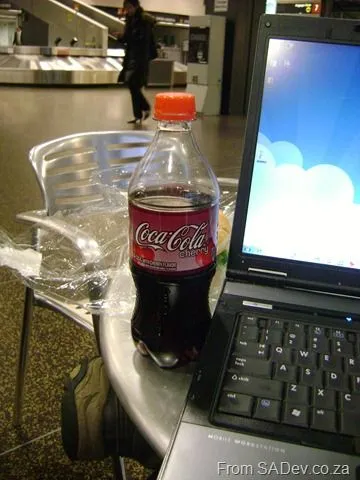
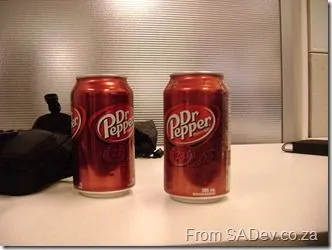
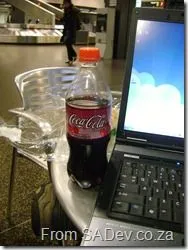
While traveling, I took the chance to drink all the drinks you no longer get in South Africa:

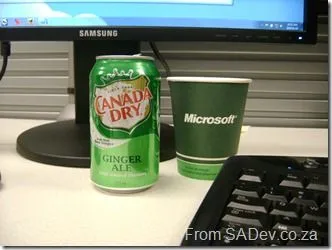
Vancouver
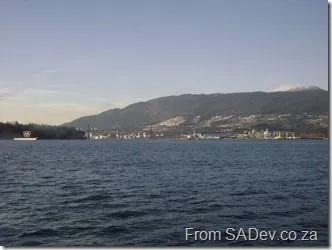
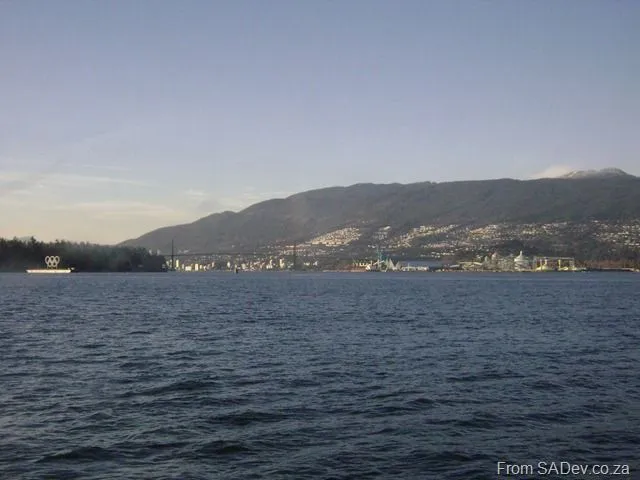
The floating Olympic sign with Stanley Park behind it—taken from the Sea Bus.
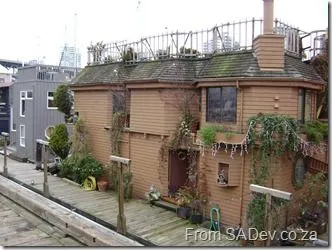
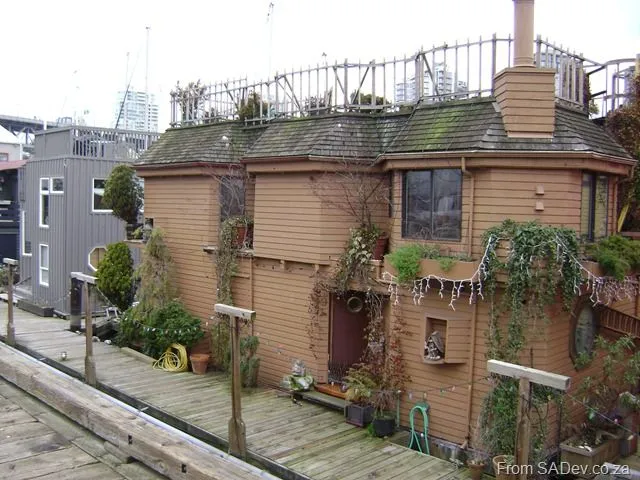
This Harry Potter-like house is actually a houseboat. I had never expected them to look so much like houses.
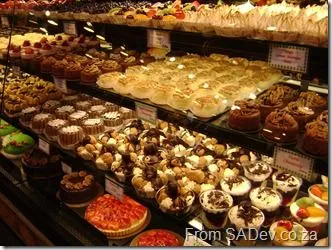
FOOD! This was taken in Granville Island, where you need loads more stomachs just to get through it.
SNOW
As someone who had never seen snow before, one of my big highlights was when Willy-Peter and his family took me up Grouse Mountain for snowshoeing!
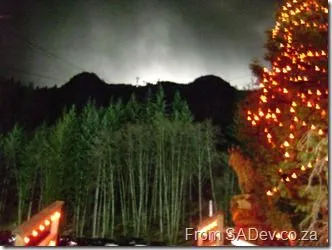
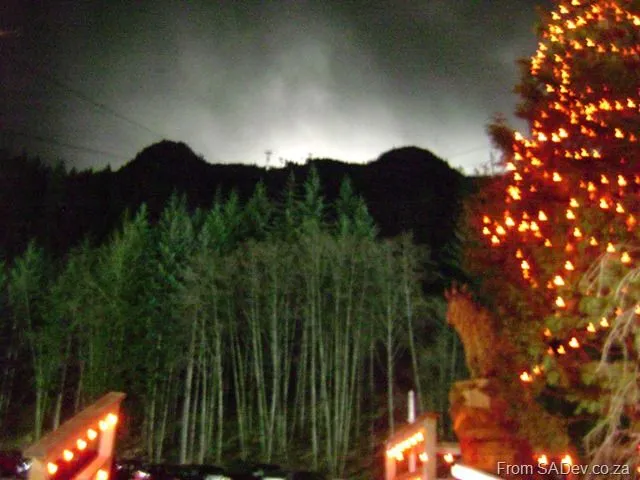
At the base of Grouse Mountain—no surprise that they shot some of The X-Files here; it is just so spooky from below. Once up there, it is beautiful.

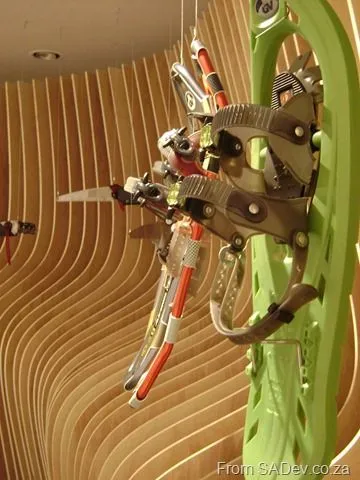
Modern snowshoes aren’t like tennis rackets anymore.
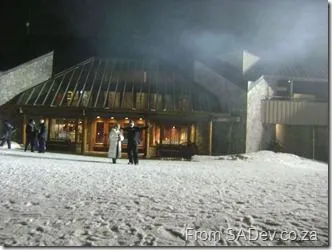
Carola and one of our snowshoe guides at the top of the mountain!
For more in this series, please visit the series index.
The MCDC (Microsoft Canadian Development Centre) was where I spent most of the day during my trip, sitting and focusing on code, drinking Dr Pepper (yet another drink no longer available in South Africa), and bugging Microsoft staff for assistance. I sat next to Willy-Peter in the unofficial VSTS section of the building, and as is my luck, the other person next to me was yet another South African working for Microsoft, named Adrian (who works on the data warehouse in TFS).
One of the cool Lego-based artworks inside the MCDC.
The MCDC was just like any development company I’ve seen in South Africa, but what really struck me was seeing how much time is spent on conference calls—and the dedication these people put into shipping quality products. Weekends and evenings are not time to relax but time to continue pushing.
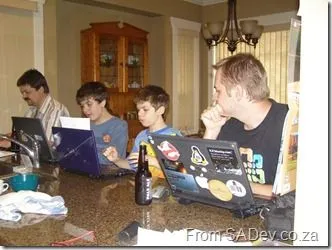
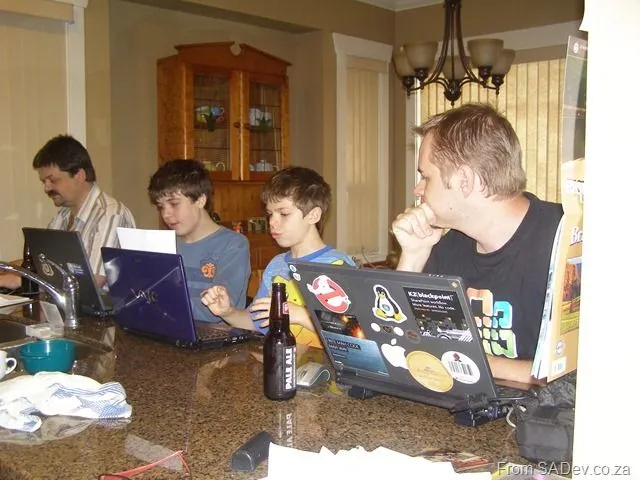
An evening with Willy-Peter (far left), his two sons, and myself in typical Microsoft delivery mode—evenings are for getting more done.
Not only is the work ethic amazing, but the amount of non-coding activities required to deliver a high-quality product is equally impressive. Two aspects really stood out for me: first, the amount of work the SDL (Security Development Lifecycle) adds to a project and how every aspect of a project is checked and rechecked for security issues. The second is the understanding that the VSTS release had been delayed due to performance—and watching how much focus is put into solving the performance issues was truly amazing. Listening to the performance improvements being made left me with no doubt that they would solve it.
However, not everything about the trip to the MCDC was easy. On several days, I had to take the trip to and from the MCDC by myself (instead of following Willy-Peter), which led to some interesting impromptu tours of Vancouver from the side of the bus (anyone who claims I got lost is just a liar). However, the public transport system is amazing—there are plenty of buses and trains, all well signposted, and I was only once unsure how to get back, so I sent a quick SMS to Willy-Peter, who checked the amazing online system.
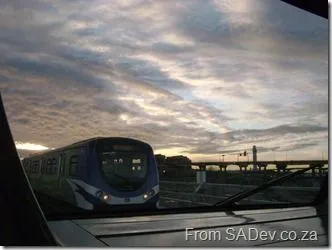
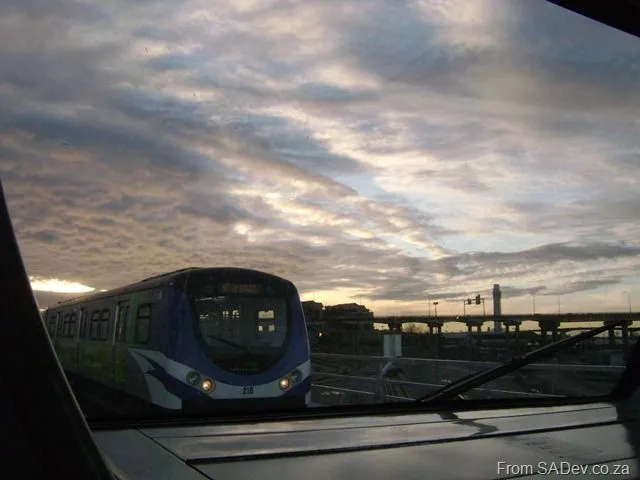
The view of an oncoming SkyTrain out the front of a SkyTrain.
The three parts of the public transport system that blew me away were the SkyTrains, which are completely automated, the SeaBus (a huge boat that ferries people across the river), and the online system. I used the online system for one trip I made, which I’ll write about in part 4. You enter the time you want to leave, your start and end locations, and it calculates a number of routes that include buses, trains, and SeaBuses to get you there.
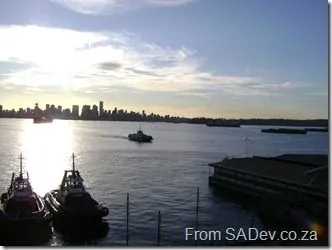
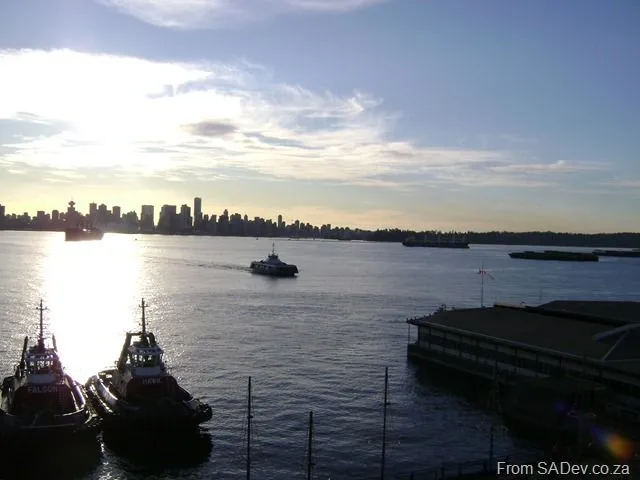
The SeaBus (in the middle of the shot) is coming into port with Vancouver city in the background.
I’m writing to you today from the back of a bus in Vancouver, Canada! It’s 7:20 a.m. here, though my clock and body insist it’s 5:26 p.m. This is the first of two buses and a train I’m currently taking to get to the Microsoft offices—quite the contrast from my usual sit in Johannesburg, South Africa, traffic! What’s going on?
Last year, I joined the Rangers project, and as part of that (an unexpected and enjoyable part), I took a three-week trip to Vancouver, Canada, and Redmond, USA. The purpose of this trip was to finish, polish, and deliver the TFS Integration Platform adapters I’ve been working on. At the same time, this gave me the chance to see what life is like at Microsoft and, more broadly, in North America!
I’d never heard of the "shoe bomber" before this trip, but this has ruined flying to America for the rest of the world—at least in my opinion. That’s my belief after going through airport security. While at OR Tambo Airport (or Johannesburg International), I’d never had to take off my shoes or belt for any flights within Africa. However, being on an American inbound flight, there was an additional check before boarding—the first of many times I would take my shoes off.
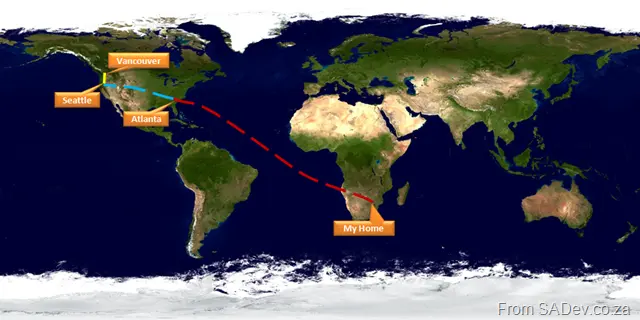
The trip itself was from Jo’burg to Atlanta, USA (red line below), then a connecting flight from there to Seattle, USA (blue line), and finally a bus to Vancouver, Canada (yellow line).
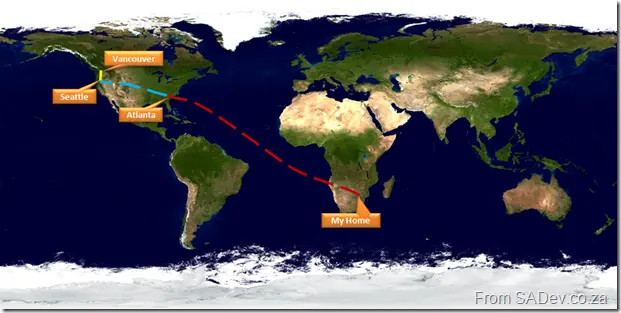 View full map
Map from http://www.oera.net/How2/TextureMaps2.htm with pins and lines added by me (not accurately).
The first flight was interesting, mostly for the in-flight entertainment, which was brilliant—I was able to watch a bunch of classic movies! Post-Christmas bomb scare, security had been heightened, which meant I missed my connecting flight to Seattle. This gave me my first chance to experience the service-driven culture that many leave South Africa for. Delta Airlines were great and got me on the next flight!
This flight to Seattle was interesting because it was the first time I tried American-style "Coke", aka Coke with high-fructose corn syrup instead of sugar—the kind the cast of Major Nelson’s Podcast has mentioned before. Now I completely understand why people sneak it over the borders: it’s way too sweet.
Later, at SeaTac Airport, I grabbed a Cherry Coke (which we don’t get in South Africa), and that was much better!
However, the most interesting part for me was the bus ride from Seattle to Vancouver. During this trip, I saw the Space Needle (which I’d imagined would be bigger) and the huge harbor that is Seattle. For some reason, I’d never thought of Seattle as a harbor town—it’s inland, after all—but the fjords and rivers in this region make it very impressive. This was also the first chance I’d had to check my email in over a day since the bus offered free WiFi.
Oddly enough, crossing into Canada didn’t require me to take off my shoes, so I guess it’s only America that’s at war with people concealing bombs in shoes and underwear. Finally, after 28 hours of travel (16 hrs flight to Atlanta; 3 hrs for customs and waiting; 5 hrs flight to Seattle; 4 hrs bus to Vancouver), I met Willy-Peter at a very rainy Vancouver bus stop.
For more in this series, please visit the series index.
Welcome to the first part of a series of posts I wrote during and after my Rangers sabbatical. In future posts, I will talk about the trip in detail, but this post will cover the history of the trip and explain what all these odd terms I may use mean.
The Rangers
The Rangers are not related to any of the following:
| A football team | A TV show | A military group | An ice hockey team |
|---|
The Rangers are a group of individuals made up of internal Microsoft staff—mostly from MCS (Microsoft Consulting Services)—MVPs (external people awarded the Microsoft Most Valuable Professional award), and key community leads.
The Rangers are linked to a specific Microsoft product; in my case, it was VSTS (Visual Studio Team System). Not all products have a Rangers team.
The goal of the Rangers is to fill gaps in products with custom solutions and guidance. This may include:
This is different from the MVP program, where you are awarded MVP status for work you have done, whereas Rangers focus on work you will do—with specific goals, projects, and guidelines.
A deeper look at the Rangers team and its structure can be found in the post VSTS Rangers Positioning: Rangers and Projects.
Normal Process
The normal process for all Rangers work—even for those employed by Microsoft—is that this is an extra effort team. Meaning, it’s done in evenings, weekends, or on bus rides alongside your day job. It’s truly a labour of love for the product.
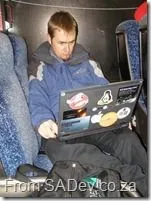 Me working on a bus during the sabbatical. Picture from Willy-Peter Schaub
Sabbatical
The sabbatical is a new concept for the Rangers, where an external person (MVP or community member) takes leave from their daily routine and works directly with the product teams. For VSTS, this means being in one or more locations, as the VSTS/VS/Rangers team spans Vancouver, Canada; Seattle, Washington, USA; Raleigh, North Carolina, USA; Hyderabad, India; and China.
Map from http://www.oera.net/How2/TextureMaps2.htm with pins added by me (not accurate).
This idea is so new to the Rangers that I was the first to participate. For me, it meant two weeks in Vancouver and one week in Seattle.
NDA
Though this trip was not a business trip for me, it was for Microsoft, and I gained access to information, people, places, and experiences I cannot disclose due to the NDA with Microsoft. If this seems limited for the time spent, there are two reasons:
- The NDA restricts what I can share.
- The technical aspects of the work will be covered in a separate series.
This post contains the list of posts in the Rangers Sabbatical series.
Part 1 – Prologue
Part 2 – Pants on the floor, shoes in the basket
Part 3 – MCDC
Part 4 – Sights of Vancouver
Part 5 – Microsoft City
Part 6 – What’s next?