Software Developers Mythology: iPhone Apps are important


Seriously your mobile strategy can exclude iPhone—you don’t need to support that platform. It isn’t really that important.
Before you move to the comments to call me a Microsoft kool-aid-guzzling fanboy, let me explain. I see three reasons that fuel the myth that iPhone is an important platform, and they are:
- Lies, Damned Lies & Statistics
- The FNB Effect
- Development is hard for these other platforms
Lies, Damned Lies & Statistics
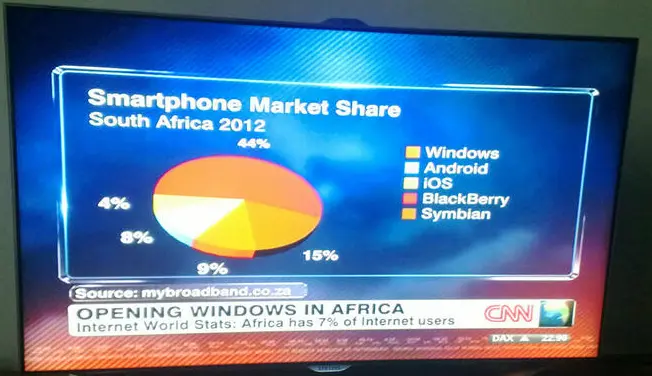
I have been totally guilty of helping this myth prevail by standing in front of thousands of Windows Phone 7 developers and showing how Gartner & IDC both predicted that Windows Phone would grow to 2nd place behind Android by 2015, pushing ahead of iPhone—which, at the time, the stats said was the number two smartphone OS.
The truth is, Windows Phone is already ahead of iPhone. It also leads Android. Maybe not worldwide or even in your country, but in South Africa, it does.
In South Africa, the picture is very different: Symbian leads by a massive margin (44%), followed by BlackBerry (15%), then Windows Phone (9%), fourth place is Android (8%), and last is iPhone (4%).
The problem is that we look at these analysts and international reports and assume they apply to us. They do not—and should not influence our understanding of our market.
The FNB Effect
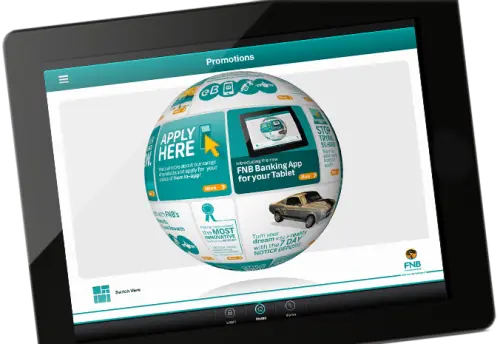
First National Bank—the bank that launched the first transactional smartphone app in South Africa and changed how we look at banking—did a lot to jumpstart app development for companies. What platform did they launch on? iPhone, and much later an Android app was released—still no Windows Phone, Symbian, or BlackBerry app (or, as I see it, 68% of the market). Since then, the number of times I have heard competing banks and companies in other industries start their mobile strategy with “FNB has iPhone—our customers expect iPhone” is staggering.
Those people are idiots. Their customers do not expect iPhone because FNB had an iPhone app; they expect an app for their phone.
There are two sub-points to consider with this factor, which are vitally important in understanding why FNB’s choice of iPhone worked for them—and why it may be right or wrong for your mobile strategy.
Know Your Customers
This is as much about the FNB effect as it is about statistics. Looking at the statistics, even for a country, is almost completely flawed. You need to look at what your customers have.
To help explain this, let’s compare two companies that both produced an iPhone app:
For Discovery, it totally makes sense to have an iPhone app. Private healthcare and life insurance are expensive and really only the top portions of the country can afford them—that’s the same market that buys iPhones. If your market has iPhones, you build for iPhones.
SABC, like so much at the national broadcaster, needs to appeal to the broad population. So they should be looking at total market share and building based on that. The issue makes less sense when you think that DSTV’s news channels and eTV’s news appeal to the upper LM groups more—so, in reality, SABC should be targeting the lower-income groups who buy cheap Symbian and BlackBerry phones. They didn’t, and it is just stupid of them.
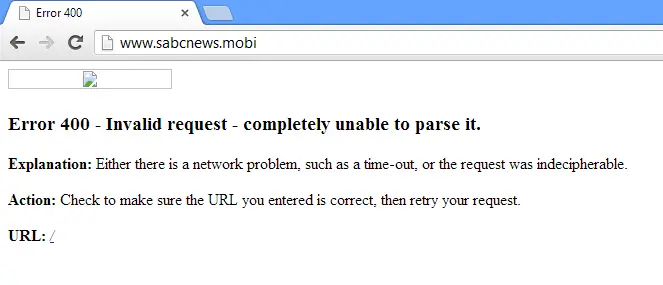
In fact, they should have a mobi site—since that would allow even broader reach—but of course, that doesn’t quite work either…
FNB’s App Isn’t Special—Their Marketing Department Is
The FNB app isn’t special. At best, the app idea was just smart business, seeing what the rest of the world was doing and getting on the bandwagon first. So why do we care? Because FNB’s marketing department is so damn amazing: they made it an important point in many of their adverts. They used it to highlight how far ahead they were and how slow and old their competitors are. They also used it in an aspirational way to appeal to lower-income groups: “One day I will be rich and own an iPhone. Then I want to be at a bank with an app.”
All four of the major banks in South Africa have apps for iPhone now—and still, we only ever talk about FNB. This isn’t because theirs is the best, but because they sold their app the best. They own the mindshare.
A second aspect of this story is that FNB has made it ridiculously easy to get an iPhone with them—firstly pushing up their stats of which platforms are important, and secondly reinforcing their marketing stories: “Wish your bank had an app? Wish you had a phone that could run an app? Come to FNB—we make it easy to have both.”
Development Is Hard for These Other Platforms
The final contributing factor to the myth that iPhone is the first port of call comes from the prima donnas involved in these strategies. You may know them as software developers. These folks will tell you that development for Symbian is tougher than milking a rattlesnake and development for BlackBerry is tougher than getting a date with Megan Fox. iPhone, Android, and Windows Phone development is easy by comparison, so you can get it done cheaper, quicker, or better.
That is, naturally, complete bullshit. It’s easier because these are sexier platforms, and because of that:
- They don’t want to feel like an idiot when sharing what they do with their friends—who knows? Megan Fox might be there, and who will she date, the iPhone dev or the Symbian dev? (I call this the embarrassment tax—you pay extra for a developer to be embarrassed)
- They likely have the devices today and already understand the platforms because they played with them in their free time. I’m talking about platform and not development. Understanding why something works on a platform is just as important as learning to code for it.
- They like the fact they don’t need to learn new languages or tools. Android and Windows Phone developers are especially bad here since they’re the top-most common development platforms (.NET and Java).
In reality, Symbian is a marvelously stable and well-developed platform with many tools. In fact, if you don’t need a transactional app, they have tools that are completely code-less (i.e., everything is done visually). I haven’t worked with BlackBerry myself, so I can’t comment on their tools—but I’ve been on projects where someone else did BlackBerry work and I did Windows Phone. In those scenarios, we were mostly matched for development performance, and any differences were not because of the tooling.
Lastly, with tools like PhoneGap and Worklight getting better all the time, the need for native apps is getting really small. You can easily use web development skills with those tools to create hybrid apps for BlackBerry and Symbian. There’s this belief, though, that if you go hybrid, you have to go all in—which is totally bullshit too. I can totally see a native app built for your premier clients and then using hybrid—which may be a second-rate experience—to clean up the rest of the market share platforms have in your customers.
Summary
In reality, iPhone may be the right choice to go for. The issue is that there are so many people who don’t apply their minds to what they really need. Instead, these lazy people who make the decisions or feed information into the decision-makers just regurgitate the bullshit that’s out there.
What I’ve hoped to highlight is that there’s no one right strategy—just with a bit of thought and investigation, you can find the one that’s right for you and more importantly, your customers.